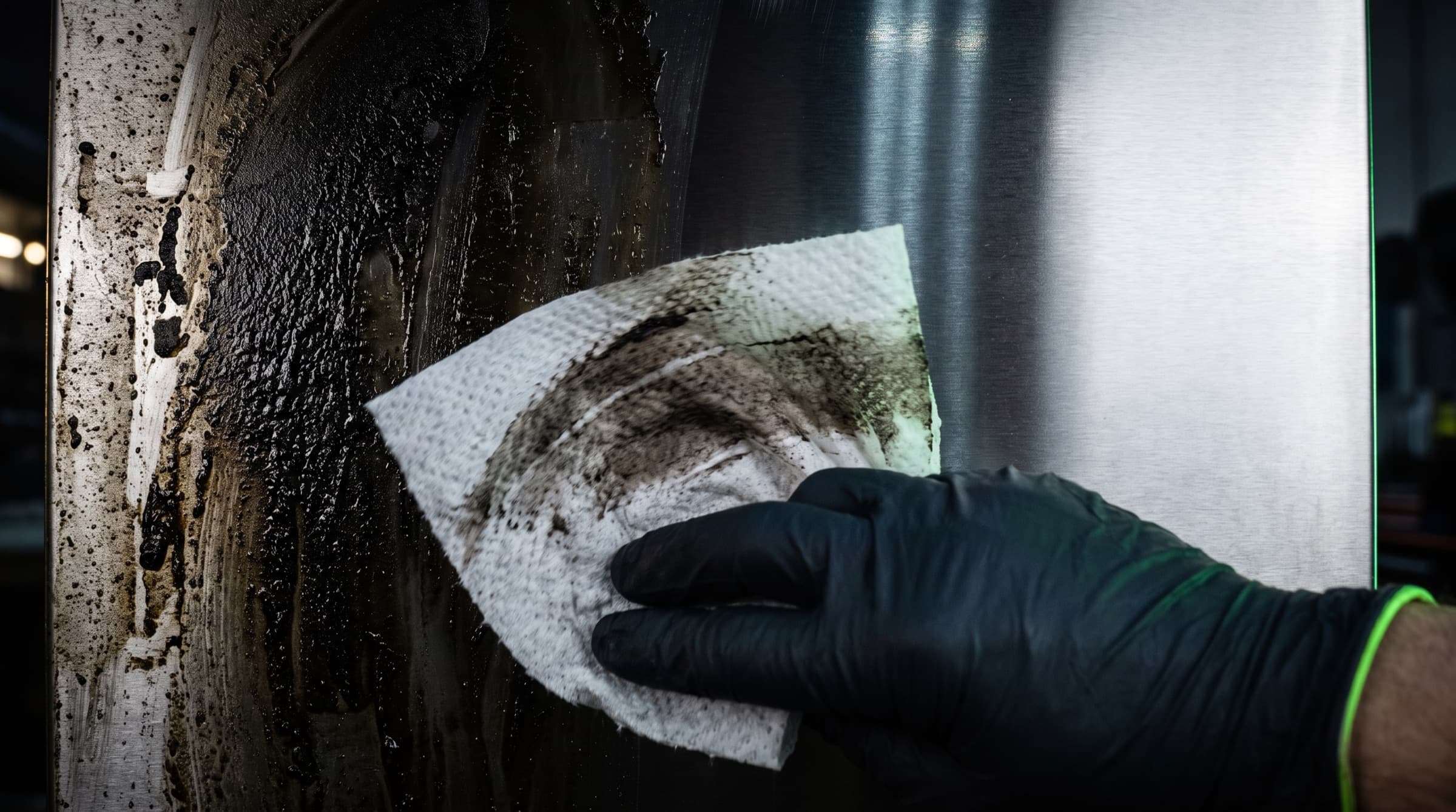
Degreasing tools without a bath or solvent
Oil on a tool is more than a cosmetic problem. A spanner with grease on it slips, a measuring tool with an oil film is harder to read, and a dirty socket carries grease onto the next job. Degreasing wipes let you clean the tool where you are using it, between two jobs, instead of saving everything for the end of the week.
Tools that get a wipe-down most often:
- spanners, sockets and ratchets
- the outside of torque wrenches and measuring tools
- grease guns and oil cans
- pliers, screwdrivers and cutters
Grease wipes for parts and machines
On parts, a wipe gets you back to clean metal quickly: grease off a bearing seat before inspection, old oil off a gearbox housing to find where a leak starts, lubricating grease off a chain guide before you measure the wear. On machines, the wipes take the oil film off frames, slides and guards.
For parts caked in old grease, scrape off the bulk first and then use the wipes for the film that remains. That keeps the number of wipes per part reasonable.
Where degreasing wipes stop
A wipe is a cleaning tool, not a surface treatment. It takes oil and grease off, but it does not replace a degreasing bath, an ultrasonic cleaner or a certified pre-treatment before bonding, coating or welding. If a specification prescribes a surface condition, follow it.
On painted or coated surfaces and on sensitive plastics, test on a spot that does not show before you clean a larger area.
Oily wipes are chemical waste
The viscose in the wipe is biodegradable, but the oil on a used wipe is not. Treat used degreasing wipes as chemical waste and dispose of them the same way your company deals with oily rags.
Degreasing step by step
- 01Scrape off thick layers of grease first with a scraper or spatula.
- 02Take a wipe from the dispenser and click the lid shut.
- 03Wipe the remaining oil or grease off, folding the wipe to a clean side as you go.
- 04Take a new wipe when the first one is dirty on both sides.
- 05Let the surface dry. No rinsing is needed.
- 06Put the used wipes with the oily waste.
What the wipes do
- Remove engine oil, lubricating grease and penetrating oil from tools and parts
- Take the oil film off machine frames, slides and guards
- Clean soot deposits off metal
- Work at the bench or on site without water
- Clean bare steel, stainless steel and aluminium parts
What they do not do
- They are not meant for use on the skin
- They do not replace a degreasing bath or an ultrasonic cleaner
- They do not make a surface ready for bonding, coating or welding to a specification
- They do not shift thick caked grease without scraping it off first