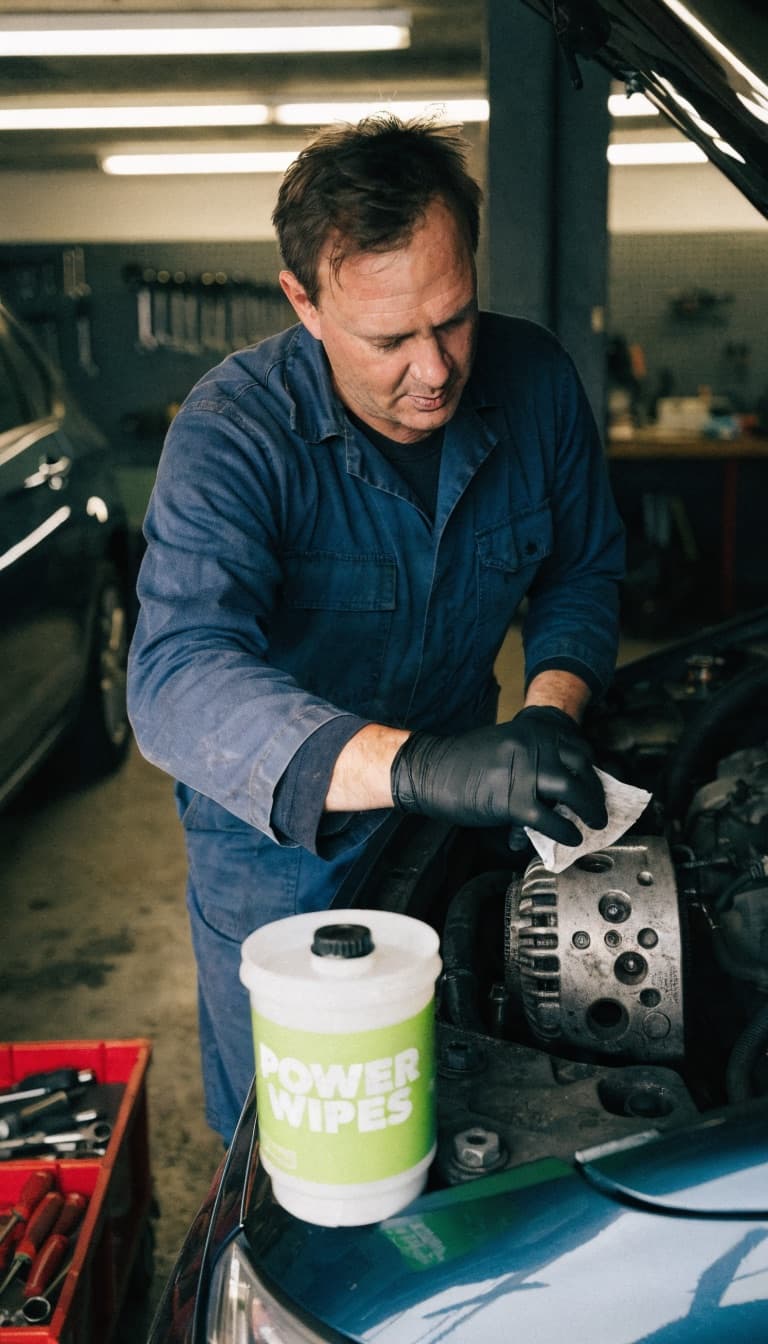
Where workshop wipes earn their place
Most of the dirt in a workshop ends up somewhere it should not be: on the torque wrench after a wheel change, on the caliper carrier you are about to refit, on the bench where the sump plug went down. A wipe that is already wet and within reach gets used. A trip to the sink tends to be put off until the end of the shift.
Mechanics use the wipes on:
- brake calipers, carriers and hubs before refitting
- engine blocks, sumps and rocker covers after an oil leak
- chain tensioners, timing covers and other parts that come out greasy
- spanners, sockets and the torque wrench before they go back in the drawer
- workbenches, vices and the arms of the lift
A clean car back to the customer
After a repair there is often a smear of grease on the steering wheel, the door pull or the gear knob. A heavy duty wipe takes that off before the customer collects the car. On sensitive trim, such as soft-touch plastics or leather, test first on a spot that does not show.
The same goes for the bonnet edge, the door shut and the boot lip, where gloves leave marks during a job. Wipe them down as part of the final check and bin the wipe.
Garage wipes for the service van and roadside work
Mobile mechanics and breakdown crews often have no tap at all. The dispenser weighs about 1 kg, stands in the back of the van and goes to the job with you. Clean the tools before they go back in the case and the van stays cleaner as well.
Leave the lid open overnight and the top wipes lose moisture, which makes them work less well. Click the lid shut after each wipe and the rest of the dispenser stays ready for the next job.
Disposing of used wipes in the workshop
The wipe itself is 100% viscose and biodegradable, but a wipe with engine oil or grease on it counts as chemical waste. Put used wipes with your oily rags and follow the waste rules that apply in your workshop.
How to use them at the bench
- 01Open the click-shut lid and pull one wipe out of the dispenser.
- 02Wipe the oil or grease off the part or tool, starting at the edge of the dirty area.
- 03Take a fresh wipe once the one in use is dirty, so you do not spread the oil around.
- 04Let the surface dry for a moment. There is nothing to rinse off.
- 05Put the used wipe with your oily waste and click the lid shut.
What the wipes do
- Take engine oil, grease, penetrating oil and lubricating grease off tools and parts
- Remove tar and soot deposits from metal and hard plastic
- Clean workbenches, vices, lift arms and control panels without water
- Take grease marks off the interior of a customer car after a repair (test first on sensitive trim)
- Stay moist in the dispenser as long as you keep the lid shut
What they do not do
- They are not meant for use on the skin
- They do not replace a parts washer for components caked in old grease
- They do not remove cured paint or hardened sealant
- Top wipes that dried out under an open lid work less well